

8.3: Carbohydrates
- Page ID
- 97386

\( \newcommand{\vecs}[1]{\overset { \scriptstyle \rightharpoonup} {\mathbf{#1}} } \)
\( \newcommand{\vecd}[1]{\overset{-\!-\!\rightharpoonup}{\vphantom{a}\smash {#1}}} \)
\( \newcommand{\dsum}{\displaystyle\sum\limits} \)
\( \newcommand{\dint}{\displaystyle\int\limits} \)
\( \newcommand{\dlim}{\displaystyle\lim\limits} \)
\( \newcommand{\id}{\mathrm{id}}\) \( \newcommand{\Span}{\mathrm{span}}\)
( \newcommand{\kernel}{\mathrm{null}\,}\) \( \newcommand{\range}{\mathrm{range}\,}\)
\( \newcommand{\RealPart}{\mathrm{Re}}\) \( \newcommand{\ImaginaryPart}{\mathrm{Im}}\)
\( \newcommand{\Argument}{\mathrm{Arg}}\) \( \newcommand{\norm}[1]{\| #1 \|}\)
\( \newcommand{\inner}[2]{\langle #1, #2 \rangle}\)
\( \newcommand{\Span}{\mathrm{span}}\)
\( \newcommand{\id}{\mathrm{id}}\)
\( \newcommand{\Span}{\mathrm{span}}\)
\( \newcommand{\kernel}{\mathrm{null}\,}\)
\( \newcommand{\range}{\mathrm{range}\,}\)
\( \newcommand{\RealPart}{\mathrm{Re}}\)
\( \newcommand{\ImaginaryPart}{\mathrm{Im}}\)
\( \newcommand{\Argument}{\mathrm{Arg}}\)
\( \newcommand{\norm}[1]{\| #1 \|}\)
\( \newcommand{\inner}[2]{\langle #1, #2 \rangle}\)
\( \newcommand{\Span}{\mathrm{span}}\) \( \newcommand{\AA}{\unicode[.8,0]{x212B}}\)
\( \newcommand{\vectorA}[1]{\vec{#1}} % arrow\)
\( \newcommand{\vectorAt}[1]{\vec{\text{#1}}} % arrow\)
\( \newcommand{\vectorB}[1]{\overset { \scriptstyle \rightharpoonup} {\mathbf{#1}} } \)
\( \newcommand{\vectorC}[1]{\textbf{#1}} \)
\( \newcommand{\vectorD}[1]{\overrightarrow{#1}} \)
\( \newcommand{\vectorDt}[1]{\overrightarrow{\text{#1}}} \)
\( \newcommand{\vectE}[1]{\overset{-\!-\!\rightharpoonup}{\vphantom{a}\smash{\mathbf {#1}}}} \)
\( \newcommand{\vecs}[1]{\overset { \scriptstyle \rightharpoonup} {\mathbf{#1}} } \)
\(\newcommand{\longvect}{\overrightarrow}\)
\( \newcommand{\vecd}[1]{\overset{-\!-\!\rightharpoonup}{\vphantom{a}\smash {#1}}} \)
\(\newcommand{\ket}[1]{\left| #1 \right>}\)
\(\newcommand{\bra}[1]{\left< #1 \right|}\)
\(\newcommand{\braket}[2]{\left< #1 \vphantom{#2} \right| \left. #2 \vphantom{#1} \right>}\)
\(\newcommand{\braopket}[3]{\left< #1 \vphantom{#2}\vphantom{#3} \right| #2 \vphantom{#1}\vphantom{#3} \left| #3 \vphantom{#1}\vphantom{#2} \right>}\)
\(\newcommand{\qmvec}[1]{\mathbf{\vec{#1}}}\)
\(\newcommand{\op}[1]{\hat{\mathbf{#1}}}\)
\(\newcommand{\expect}[1]{\langle #1 \rangle}\)
\(\newcommand{\dfn}[1]{\emph{\textbf{#1}}}\)

Introduction
Carbohydrates are one of the three main macronutrients that provide the body with energy, alongside protein and fat. Found in a wide variety of foods such as fruits, vegetables, grains, legumes, and dairy products, carbohydrates are the body’s primary and preferred source of fuel. Chemically, carbohydrates are made up of carbon, hydrogen, and oxygen atoms, and they exist in several forms, primarily sugars, starches, and fiber. While some carbohydrates are quickly absorbed and provide rapid energy, others are digested more slowly and offer longer-lasting fuel. A balanced intake of carbohydrates is essential for supporting physical activity, brain function, and many metabolic processes.
Function
The major functions of carbohydrates are to:
- Provide energy: Carbohydrates are the body’s primary and most efficient source of energy. During digestion, they are broken down into glucose, which cells use for fuel.
- Fuel for the brain and nervous system: The brain relies heavily on glucose for proper function. Inadequate carbohydrate intake can impair mental performance and focus.
- Promote protein-sparing: When sufficient carbohydrates are available, the body uses them for energy rather than breaking down muscle protein, preserving muscle tissue.
- Aid in fat metabolism: Carbohydrates are necessary for the complete breakdown of fats. Without enough carbs, fat metabolism is incomplete, leading to the production of ketones.
- Support digestive health: Certain carbohydrates, like dietary fiber, help maintain bowel regularity, support gut health, and may lower cholesterol levels.
Digestion and Breakdown of Carbohydrates
When carbohydrates are consumed, the digestive system begins breaking them down into simple sugars, primarily glucose, which the body can absorb and use for energy. This process starts in the mouth with the enzyme salivary amylase and continues in the small intestine, where enzymes further convert complex carbohydrates (starches and disaccharides) into monosaccharides. These sugars are then absorbed into the bloodstream and transported to cells, where they are used immediately for energy. When glucose is not immediately needed for energy, the body stores it for later use. First, it is converted into glycogen and stored in the liver and skeletal muscles. However, these glycogen stores are limited. Once they are full, any excess glucose is converted into triglycerides (fat) through a process called lipogenesis and stored in adipose (fat) tissue. This stored energy can later be used when glucose levels are low, such as between meals or during physical activity. Excess consumption of carbohydrates, like any macronutrient, can lead to weight gain and increased body fat. Fiber, a type of carbohydrate that is not fully digested, plays a vital role in digestive health by aiding in bowel regularity and promoting satiety.
Simple Carbohydrates
Simple carbohydrates, also known as sugars, are the most basic form of carbohydrates. Chemically, they consist of one or two sugar molecules, making them quick to digest and absorb into the bloodstream. The two types of simple sugars are monosaccharides, like glucose and fructose, and disaccharides, such as sucrose (table sugar) and lactose (the sugar found in milk). Because of their small molecular structure, simple carbohydrates are rapidly broken down by the digestive system and quickly elevate blood glucose levels.
These types of carbohydrates are naturally present in a variety of nutritious foods. For example, fruit contains fructose, but also provides fiber, vitamins, and antioxidants, which help moderate the impact on blood sugar. Dairy products contain lactose along with protein and calcium, offering a more balanced nutritional profile. However, simple sugars are often added to foods during processing, preparation, and at the table. These added sugars are found in many processed foods and beverages, such as sodas, candy, pastries, and sweetened cereals. These products often provide calories without essential nutrients and are commonly referred to as “empty calories.”
Sugar and Health
While the body uses simple sugars for quick energy, excessive intake of added sugars can contribute to weight gain, insulin resistance, and a higher risk of chronic diseases such as type 2 diabetes and heart disease (Carter et al, 2024). [5] Huang evaluated dozens of meta-analyses and found strong associations between high sugar consumption and multiple health outcomes, including obesity, cardiovascular conditions, metabolic dysfunction, neuropsychiatric issues, cancer, and other health issues (Huang et al, 2022). [8] The review specifically recommends limiting free or added sugars to below 25 g/day ( about 6 teaspoons) and restricting sugar-sweetened beverage intake to less than one serving per week to reduce health risk (Huang et al, 2022). [8] Many Americans consume significantly more added sugars than recommended, often exceeding the Dietary Guidelines’ suggested limit of less than 10% of daily calories (U.S. Department of Agriculture and U.S. Department of Health and Human Services, 2020). [30] The main sources of excess sugar include sugar-sweetened beverages, desserts, and processed snacks. For example, one regular 12-ounce soft drink (soda) has about 40 grams (10 teaspoons) of added sugars and 130 calories. For these reasons, health guidelines recommend limiting added sugars in the diet and focusing instead on whole foods that offer a mix of carbohydrates, fiber, and other nutrients. Understanding the role of simple carbohydrates and how they differ in natural versus processed sources helps support healthier food choices and balanced energy levels.
Natural Sugar
These natural sugars come with fiber, vitamins, and minerals that support overall health.
- Fructose: found in fruits like apples, oranges, berries, and mangoes
- Glucose: present in fruits, vegetables, and honey
- Galactose: found mainly in dairy products as part of lactose
- Lactose: the sugar naturally present in milk and dairy products
- Sucrose: naturally occurring in fruits and some vegetables like carrots and beets (a combination of glucose and fructose)
Added Sugar
These sugars are added during processing or preparation and contribute extra calories without providing significant nutrients.
- Table sugar (sucrose): added to baked goods, candies, sauces, and beverages
- High-fructose corn syrup (HFCS): commonly used in sodas, fruit drinks, processed snacks, and sweets
- Honey: used as a sweetener in cereals, granola bars, and some baked products
- Maple syrup: added to pancakes, waffles, desserts, and flavored drinks
- Molasses: found in baked goods, baked beans, gingerbread, barbecue sauces, and some candies
- Agave nectar: used in beverages, desserts, and some processed foods
- Brown sugar: added to cookies, cakes, sauces, and some cereals
- Corn syrup: used in candies, frostings, and processed desserts
- Dextrose, glucose, fructose, lactose, maltose: found individually or in combinations in processed foods
- Glucose syrup: often found in processed foods and candies
- Fruit juice concentrate: fruit snacks, flavored yogurts, juice boxes
- Evaporated cane juice: organic or “natural” packaged foods
- Coconut sugar: trendy snack foods, baked goods
- Malt syrup: flavored cereals, malted drinks
According to the 2020-2025 Dietary Guidelines for Americans, reducing added sugars helps:
- Lower calorie intake without sacrificing essential nutrients.
- Decrease risk of obesity, type 2 diabetes, heart disease, and dental cavities.
- Promote a more balanced diet that meets micronutrient and fiber needs (U.S. Department of Agriculture and U.S. Department of Health and Human Services, 2020). [30]
- How much sugar do you think you consume each day?
- Were you surprised to learn which common foods contain added sugars?
- How might this awareness influence your future food choices?
Complex Carbohydrates
Complex carbohydrates are long chains of sugar molecules that take longer to digest and absorb than simple carbohydrates. These carbohydrates are primarily found in plant-based foods such as whole grains, legumes, vegetables, and some fruits. The most common complex carbohydrate is starch, which is made up of many glucose units bonded together. Because of their longer and more complex structure, these carbohydrates provide a slower, more sustained release of energy compared to simple sugars. This makes them an important source of fuel for long-lasting physical and mental activity. Most starches are broken down into glucose during digestion, providing a quick source of energy for the body to use. However, some foods, such as legumes, contain resistant starches and more fiber, which slow digestion and aren’t fully broken down in the small intestine. This leads to a slower rise in blood sugar and supports digestive health by feeding beneficial gut bacteria.
Another important form of complex carbohydrate is dietary fiber, which is found in the cell walls of plant foods. Unlike starches, fiber cannot be fully broken down by the human digestive system, but it plays a critical role in helping to regulate bowel movements, support healthy cholesterol levels, and promote a feeling of fullness. Foods high in fiber, such as brown rice, oats, beans, and vegetables, can also help manage blood sugar levels by slowing the absorption of glucose.
Including complex carbohydrates in the diet is associated with a variety of health benefits. They are typically more nutrient-dense, providing not just energy but also essential vitamins, minerals, and phytochemicals. Choosing whole and minimally processed complex carbohydrates over refined ones—like white bread or sugary snacks—can support better weight management, heart health, and blood sugar control.
Grains are a staple food in many diets worldwide and serve as an important source of carbohydrates, fiber, and various essential nutrients. They are edible seeds from certain types of grasses. Common types of grains include wheat, rice, oats, corn, barley, and rye. They can be consumed in many forms, from whole kernels to ground flour, and are used to make foods such as bread, pasta, cereal, and tortillas. Grains are a key source of energy and provide essential nutrients, including B vitamins, iron, magnesium, and selenium. Figure \(\PageIndex{2}\) depicts the wheat plant, with kernels located near the stem. Extending from each kernel are long, hair-like structures known as the beard.
Whole grains refer to grains that contain all three naturally occurring parts of the kernel: the bran, germ, and endosperm. Figure \(\PageIndex{3}\) illustrates the anatomy of the whole wheat grain and labels the bran, germ, and endosperm. The bran is the outer layer and is rich in fiber, antioxidants, and B vitamins. The germ is the nutrient-rich core that contains healthy fats, vitamins, and minerals. The endosperm is the largest part of the grain and contains mostly carbohydrates along with some protein. Because whole grains contain all parts of the grain kernel, the bran, germ, and endosperm, they naturally provide more nutrients and dietary fiber than refined grains. Examples of whole grains include brown rice, whole wheat, quinoa, oats, bulgur, and millet.
When grains are refined, the bran and germ are removed, leaving only the starchy endosperm. This process gives the grain a finer texture and longer shelf life, but significantly reduces its nutritional value. Refined grains, like white rice, white bread, and many pastries, lose much of their fiber, vitamins, and minerals. Although some refined grains are “enriched” to add back certain nutrients (like iron and some B vitamins), they still lack the full nutritional benefits of whole grains. A diet rich in whole grains has been linked to better digestive health, reduced risk of heart disease, and improved blood sugar control, making them the preferred choice in a healthy eating pattern.


Consuming more whole grains is specifically linked to better overall health due to their high content of dietary fiber, vitamins, minerals, and beneficial plant compounds. Research has shown that regular consumption of whole grains can reduce the risk of chronic diseases such as heart disease, type 2 diabetes, and certain types of cancer (Aune et al, 2016). [2] Their fiber content also supports digestive health and helps regulate blood sugar levels. Whole grains not only support better overall health, but they are also linked to less weight gain over time compared to diets high in simple carbohydrates.
The Glycemic Index
Glucose’s counterpart is insulin. Insulin is a hormone made in the pancreas that is released to help the cells take up glucose and use it for energy and fat storage. The levels of insulin and glucose rise and fall after eating any type of carbohydrate. The more sugary the food, the greater the rise, and vice versa. The glycemic index (GI) is the measure of how a particular food affects blood glucose levels. It is a tool used to rank carbohydrate-containing foods based on how much and how quickly they raise blood glucose levels after consumption. Foods are scored on a scale from 0 to 100, with higher numbers indicating a faster rise in blood sugar. For example, white bread and sugary cereals have a high GI, while oats and most legumes have a low GI. Eating low-GI foods may help with blood sugar management, improve energy levels, and reduce the risk of type 2 diabetes and heart disease. While the glycemic index is a useful guideline, it’s also important to consider overall nutrient content and portion sizes when making food choices (Townsend et al, 2021). [27]
Glycemic Ratings
- Low-GI foods (55 or less) are digested slowly and help maintain stable blood sugar levels. Examples include legumes, dairy, fruits, and barley.
- Medium-GI foods (56–69) cause moderate blood sugar increases, such as oatmeal, couscous, and whole wheat pasta.
- High-GI foods (70 and above) cause rapid spikes in blood glucose. Examples include white bread, white rice, and many processed snacks.
| Food | GI Value | GI Rating |
|---|---|---|
|
Apple |
44 |
Low |
| Apple | 44 | Low |
| Lentils | 30 | Low |
| Chickpeas | 33 | Low |
| Whole Milk | 30 | Low |
| Barley | 33 | Low |
| Yogurt (plain, no sugar) | 21 | Low |
| Oatmeal | 64 | Medium |
| Couscous | 62 | Medium |
| Raisins | 64 | Medium |
| Whole wheat pasta | 59 | Medium |
| Banana (ripe) | 51-56 | Medium |
| White bread | 75-83 | High |
| Baked potato | 85 | High |
| Cornflakes | 80 | High |
| White jasmine rice | 82 | High |
| Pretzels | 84 | High |
Table \(\PageIndex{1}\) indicates common goods rated by glycemic index as per ratings from The International Glycemic Index (GI) Database created by the University of Sydney (The University of Sydney, 2012). [25]
- If complex carbohydrates offer greater nutritional benefits and help prevent chronic disease, why do so many people still rely heavily on simple sugars and refined carbs in their daily diets?
- Can you make half your grains whole? Try swapping out half of your refined grains with whole grains for a big health difference.
Fiber
Fiber is a type of carbohydrate that the body cannot digest. Unlike other carbohydrates that are broken down into sugar molecules, fiber passes through the digestive system mostly intact. Though it doesn’t provide energy in the form of calories, fiber plays a critical role in maintaining digestive health, regulating blood sugar, and supporting heart health. It also helps individuals feel fuller for longer, which can assist in managing weight.
Dietary fiber refers specifically to the naturally occurring fibers found in plant-based foods such as fruits, vegetables, whole grains, legumes, nuts, and seeds. There are two main types of dietary fiber: soluble and insoluble. Soluble fiber dissolves in water and can help lower glucose levels and blood cholesterol. Insoluble fiber, on the other hand, does not dissolve in water and helps food move through the digestive system, promoting regular bowel movements.
In addition to its digestive benefits, fiber plays a protective role against several chronic diseases. Diets high in fiber have been associated with a lower risk of heart disease, type 2 diabetes, certain types of cancer, and obesity. Fiber also contributes to improved gut health by supporting beneficial bacteria in the microbiome, which in turn may enhance immune function and reduce inflammation (Fu et al, 2022). [7]
Despite its health benefits, most Americans fall short of the daily fiber recommendations. Increasing fiber intake is as simple as choosing whole-grain products over refined ones, eating more fruits and vegetables with the skin on, and including a variety of legumes and nuts in the diet. Understanding the importance of fiber is an essential step toward building healthier eating patterns and preventing nutrition-related health issues (Fu et al, 2022). [7]
Soluble (Viscous) Fiber
Soluble fiber is a type of dietary fiber that dissolves in water to form a gel-like substance in the digestive tract. This property allows it to slow down digestion, which can help regulate blood sugar levels and lower LDL (“bad”) cholesterol. Soluble fiber also contributes to feelings of fullness, making it helpful for appetite control and weight management. Foods rich in soluble fiber include oats, barley, beans, lentils, apples, citrus fruits, strawberries, and carrots. Including these foods regularly in the diet can support heart health and improve metabolic function.
Insoluble fiber
Insoluble fiber is a type of dietary fiber that does not dissolve in water and passes through the digestive system largely intact. Its primary role is to add bulk to the stool and promote regular bowel movements, helping to prevent constipation and support overall digestive health. Insoluble fiber also helps maintain a healthy colon and may reduce the risk of developing certain digestive disorders, such as diverticulosis. Foods that are good sources of insoluble fiber include whole wheat flour, wheat bran, brown rice, nuts, seeds, and many vegetables like cauliflower, green beans, and potatoes. Including a variety of these foods in the diet helps ensure proper digestive function and contributes to long-term gut health.
Fiber Content in Food
Dietary fiber is found naturally in plant-based foods, including fruits, vegetables, whole grains, legumes, nuts, and seeds. It is an essential component of the plant cell wall and is typically concentrated in the outer layers of grains and the skins of fruits and vegetables. In addition to these natural sources, fiber can also be added to foods during processing to boost their fiber content. These added fibers, often referred to as “functional fibers,” can be isolated from plants or synthesized and are commonly found in products like high-fiber cereals, granola bars, yogurts, and meal replacements. Both naturally occurring and added fibers contribute to total fiber intake and can offer health benefits, though whole food sources often provide a wider range of nutrients along with the fiber.
According to the USDA's FoodData Central, fiber content in grams can be determined for many plant foods (USDA, 2019) [28] Table \(\PageIndex{2}\) depicts the fiber content in many grains, cereals, pasta, and rice by serviving size. Table \(\PageIndex{3}\) depicts the fiber content by serving size of a variety of vegetables, and Table \(\PageIndex{4}\) indicates the same for a variety of fruits. Table \(\PageIndex{5}\) lists the fiber content by serving size of a variety of legumes, and Table \(\PageIndex{6}\) depicts nuts and Table \(\PageIndex{7}\) depicts seeds. As a note, all of these foods listed have fewer than 200 calories per serving.
| Food | Serving Size | Fiber (grams) |
|---|---|---|
| Whole wheat spaghetti (cooked) | 1 cup | 6.3 |
| Brown rice (cooked) | 1 cup | 3.5 |
| Quinoa (cooked) | 1 cup | 5.2 |
| Barley, pearled (cooked) | 1 cup | 6.0 |
| Oatmeal, rolled oats (cooked) | 1 cup | 4.0 |
| Bulgur (cooked) | 1 cup | 8.2 |
| Millet (cooked) | 1 cup | 2.3 |
| Popcorn (air-popped) | 3 cups | 3.6 |
| Whole wheat bread | 1 slice | 2.0 |
| Whole grain cereal (e.g. bran flakes) | 1 cup | 7-10 |
| Rye bread | 1 slice | 1.9 |
| Steel-cut oats (cooked) | 1 cup | 5.0 |
| Cornmeal (cooked) | 1 cup | 4.5 |
| Amaranth (cooked) | 1 cup | 5.2 |

| Vegetable | Serving Size | Fiber (grams) |
|---|---|---|
| Green peas | 1 cup | 8.8 |
| Broccoli | 1 cup | 5.1 |
| Brussels sprouts | 1 cup | 4.1 |
| Sweet potato (with skin) | 1 medium (about 150 g) | 3.8 |
| Carrots | 1 cup (raw, chopped) | 3.6 |
| Spinach (cooked) | 1 cup | 4.3 |
| Kale (cooked) | 1 cup | 2.6 |
| Collard greens (cooked) | 1 cup | 5.3 |
| Artichoke (cooked) | 1 medium | 6.9 |
| Acorn squash (baked) | 1 cup | 9.0 |
| Turnip greens (cooked) | 1 cup | 5.0 |
| Cauliflower | 1 cup | 2.9 |
| Zucchini (with skin) | 1 cup (cooked) | 2.5 |
| Beets | 1 cup (cooked) | 3.8 |
| Corn (cooked) | 1 cup | 3.6 |
| Cabbage (cooked) | 1 cup | 4.0 |
| Onion (cooked) | 1 cup | 4.0 |
| Pumpkin (cooked) | 1 cup | 3.0 |
Fiber content can vary slightly by preparation method and portion size. Cooking usually reduces fiber slightly per volume but increases digestibility.

| Fruit | Serving Size | Fiber (grams) |
|---|---|---|
| Raspberries | 1 cup (raw) | 8.0 |
| Pears (with skin) | 1 medium | 5.5 |
| Apples (with skin) | 1 medium | 4.4 |
| Bananas | 1 medium | 3.1 |
| Oranges | 1 medium | 3.0 |
| Strawberries | 1 cup (halved) | 3.3 |
| Avocado | ½ fruit (medium) | 5.0 |
| Figs (dried) | ¼ cup | 3.7 |
| Prunes | 5 prunes | 3.0 |
| Guava | 1 medium | 3.0 |
| Blueberries | 1 cup | 3.6 |
| Blackberries | 1 cup | 7.6 |
| Kiwi | 1 medium | 2.1 |
| Medjool Dates | 2 dates | 3.2 |
| Mango | 1 cup (sliced) | 2.6 |
| Pomegranate Seeds | ½ cup | 3.5 |
Eating fruits with the skin on (like apples and pears) adds more fiber. Fresh, frozen, or dried forms all count—just watch for added sugars in dried options.
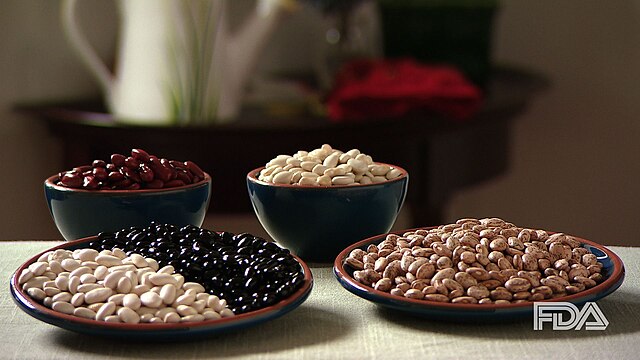
| Food | Serving Size | Fiber (grams) |
|---|---|---|
| Lentils | 1 cup | 15.6 |
| Black beans | 1 cup | 15.0 |
| Chickpeas | 1 cup | 12.5 |
| Kidney Beans | 1 cup | 13.1 |
| Navy Beans | 1 cup | 19.1 |
| Split Peas | 1 cup | 16.3 |
| Pinto beans | 1 cup | 15.4 |
| Edamame | 1 cup (cooked) | 8.1 |
| Baked beans (canned) | 1 cup | 10.4 |
| Green peas | 1 cup (cooked) | 8.8 |
Legumes are among the most fiber-rich foods and also provide protein and minerals.

| Nut | Serving Size | Fiber (grams) |
|---|---|---|
| Almonds | 1 oz (about 23 nuts) | 3.5 |
| Pistachios | 1 oz (about 49 nuts) | 2.9 |
| Pecans | 1 oz (about 19 halves) | 2.7 |
| Walnuts | 1 oz (about 14 halves) | 2.0 |
| Hazelnuts | 1 oz (about 21 nuts) | 2.7 |
| Peanuts | 1 oz (about 28 nuts) | 2.4 |
| Cashews | 1 oz (about 18 nuts) | 0.9 |
| Brazil nuts | 1 oz (about 6 nuts) | 2.1 |

| Seed | Serving Size | Fiber (grams) |
|---|---|---|
| Chia seeds | 2 tbsp | 9.8 |
| Flaxseeds (whole) | 2 tbsp | 5.6 |
| Pumpkin seeds | 1 oz | 1.1 |
| Sunflower seeds | 1 oz | 2.4 |
| Hemp seeds | 3 tbsp | 1.2 |
| Sesame seeds | 1 tbsp | 1.1 |
| Poppy seeds | 1 tbsp | 2.0 |
Chia and flax seeds are especially high in fiber and healthy fats.
Make a list of 5-10 foods that are high in fiber that you enjoy.
- What changes could you make to your daily eating habits to help ensure you’re getting enough fiber from whole food sources?
Nutritional Goals for Carbohydrates
The Dietary Guidelines for Americans (DGA) 2020–2025 provide specific nutritional goals for carbohydrate intake, with a strong emphasis on reducing added sugars to support overall health (U.S. Department of Agriculture and U.S. Department of Health and Human Services, 2020). [30] Here are the key carbohydrate-related goals:
- Total Carbohydrate Intake: 45–65% of total daily calories should come from carbohydrates (as outlined in the AMDR). The DRIs recommend a minimum of 130 grams of carbohydrates for adults.
- Emphasis on Nutrient-Dense Sources: Prioritize carbohydrates from vegetables, fruits, whole grains, legumes, and low-fat dairy. These sources provide fiber, vitamins, minerals, and other beneficial compounds.
- Limit Added Sugars: Less than 10% of total daily calories should come from added sugars for individuals aged 2 years and older. For example, on a 2,000-calorie diet, that’s no more than 200 calories from added sugars, or about 12 teaspoons (50 grams). Children under age 2 should avoid added sugars entirely.
- Encourage Fiber Intake: Consume adequate amounts of dietary fiber, mainly from whole grains, fruits, vegetables, and legumes, to support digestive health and reduce the risk of chronic diseases.
Key Points
- Carbohydrates are the body’s main source of energy and play a central role in daily nutrition.
- A significant portion of daily calorie intake should come from carbohydrates.
- Choosing nutrient-dense carbohydrate sources supports overall health.
- Fruits, vegetables, whole grains, legumes, and low-fat dairy are recommended carbohydrate options.
- These foods provide essential nutrients such as fiber, vitamins, and minerals.
- Fiber from whole-food sources is especially important for digestive health.
- Higher fiber intake also reduces the risk of chronic diseases.
- Added sugars should be limited to avoid excess calorie intake and negative health effects.
- Reducing added sugars helps improve long-term metabolic and cardiovascular health.
- A balanced approach to carbohydrate intake promotes energy, wellness, and disease prevention.