

5.5: Protein in Foods
- Page ID
- 135655

\( \newcommand{\vecs}[1]{\overset { \scriptstyle \rightharpoonup} {\mathbf{#1}} } \)
\( \newcommand{\vecd}[1]{\overset{-\!-\!\rightharpoonup}{\vphantom{a}\smash {#1}}} \)
\( \newcommand{\dsum}{\displaystyle\sum\limits} \)
\( \newcommand{\dint}{\displaystyle\int\limits} \)
\( \newcommand{\dlim}{\displaystyle\lim\limits} \)
\( \newcommand{\id}{\mathrm{id}}\) \( \newcommand{\Span}{\mathrm{span}}\)
( \newcommand{\kernel}{\mathrm{null}\,}\) \( \newcommand{\range}{\mathrm{range}\,}\)
\( \newcommand{\RealPart}{\mathrm{Re}}\) \( \newcommand{\ImaginaryPart}{\mathrm{Im}}\)
\( \newcommand{\Argument}{\mathrm{Arg}}\) \( \newcommand{\norm}[1]{\| #1 \|}\)
\( \newcommand{\inner}[2]{\langle #1, #2 \rangle}\)
\( \newcommand{\Span}{\mathrm{span}}\)
\( \newcommand{\id}{\mathrm{id}}\)
\( \newcommand{\Span}{\mathrm{span}}\)
\( \newcommand{\kernel}{\mathrm{null}\,}\)
\( \newcommand{\range}{\mathrm{range}\,}\)
\( \newcommand{\RealPart}{\mathrm{Re}}\)
\( \newcommand{\ImaginaryPart}{\mathrm{Im}}\)
\( \newcommand{\Argument}{\mathrm{Arg}}\)
\( \newcommand{\norm}[1]{\| #1 \|}\)
\( \newcommand{\inner}[2]{\langle #1, #2 \rangle}\)
\( \newcommand{\Span}{\mathrm{span}}\) \( \newcommand{\AA}{\unicode[.8,0]{x212B}}\)
\( \newcommand{\vectorA}[1]{\vec{#1}} % arrow\)
\( \newcommand{\vectorAt}[1]{\vec{\text{#1}}} % arrow\)
\( \newcommand{\vectorB}[1]{\overset { \scriptstyle \rightharpoonup} {\mathbf{#1}} } \)
\( \newcommand{\vectorC}[1]{\textbf{#1}} \)
\( \newcommand{\vectorD}[1]{\overrightarrow{#1}} \)
\( \newcommand{\vectorDt}[1]{\overrightarrow{\text{#1}}} \)
\( \newcommand{\vectE}[1]{\overset{-\!-\!\rightharpoonup}{\vphantom{a}\smash{\mathbf {#1}}}} \)
\( \newcommand{\vecs}[1]{\overset { \scriptstyle \rightharpoonup} {\mathbf{#1}} } \)
\(\newcommand{\longvect}{\overrightarrow}\)
\( \newcommand{\vecd}[1]{\overset{-\!-\!\rightharpoonup}{\vphantom{a}\smash {#1}}} \)
\(\newcommand{\ket}[1]{\left| #1 \right>}\)
\(\newcommand{\bra}[1]{\left< #1 \right|}\)
\(\newcommand{\braket}[2]{\left< #1 \vphantom{#2} \right| \left. #2 \vphantom{#1} \right>}\)
\(\newcommand{\braopket}[3]{\left< #1 \vphantom{#2}\vphantom{#3} \right| #2 \vphantom{#1}\vphantom{#3} \left| #3 \vphantom{#1}\vphantom{#2} \right>}\)
\(\newcommand{\qmvec}[1]{\mathbf{\vec{#1}}}\)
\(\newcommand{\op}[1]{\hat{\mathbf{#1}}}\)
\(\newcommand{\expect}[1]{\langle #1 \rangle}\)
\(\newcommand{\dfn}[1]{\emph{\textbf{#1}}}\)
In this section, we’ll discuss how to determine how much protein you need and your many choices in designing an optimal diet with high-quality protein sources.
How Much Dietary Protein Does a Person Need?
Because our bodies are so efficient at recycling amino acids, protein needs are not as high as those for carbohydrates and fats. The Recommended Dietary Allowance (RDA) for a sedentary adult is 0.8 g per kg body weight per day (Institute of Medicine [IOM], 2011, Table Recommended Dietary Allowances and Adequate Intakes, Total Water and Macronutrients). This would mean that a 165-pound man and a 143-pound woman would need 60 g and 52 g of protein per day, respectively. The Acceptable Macronutrient Distribution Range (AMDR) for protein for adults is 10% to 35% of total energy intake (National Academies of Sciences, Engineering, and Medicine [NASEM], 2024, Table 3-1). A Tolerable Upper Intake Limit for protein has not been set, but it is recommended that you not exceed the upper end of the AMDR.
Protein needs are higher for the following populations:
- growing children and adolescents
- women who are pregnant (they’re using protein to help grow a fetus)
- lactating women (breast milk has protein in it for the baby’s nutrition, so mothers need more protein to synthesize that milk)
- athletes
The Academy of Nutrition and Dietetics, Dietitians of Canada, and the American College of Sports Medicine recommend "1.2 to 2.0 grams" of protein per kilogram of body weight per day for athletes, depending on the type of training (Thomas et al., 2016, Summary section). Higher intakes may be needed for short periods during intensified training or when energy intake is reduced.
Nitrogen Balance to Determine Protein Needs
The appropriate amount of protein in a person’s diet is the amount that maintains a balance between what is taken in and what is used. The Recommended Dietary Allowance (RDA) for protein was determined by assessing nitrogen balance (IOM, 2005, p. 589). Nitrogen is one of the four basic elements contained in all amino acids. When amino acids are broken down, nitrogen is released. Most nitrogen is excreted as urea in urine, but some urea is also contained in feces. Nitrogen is also lost in sweat and through hair and nail growth. The RDA, therefore, is the amount of protein a person should consume in their diet to balance the body's protein use, measured as the amount of nitrogen lost from the body. The Institute of Medicine (2005) used data from multiple studies that measured nitrogen balance across different age groups to calculate the RDA for protein (p. 589).
- Nitrogen Balance: A person is said to be in nitrogen balance when the nitrogen consumed equals the amount of nitrogen excreted. Most healthy adults are in nitrogen balance. If more protein is consumed than needed, this extra protein is used for energy, and the nitrogen waste that results is excreted. The lowest amount of protein a person can consume and still remain in nitrogen balance represents that person’s minimum protein requirement.

- Negative Nitrogen Balance: A person is in negative nitrogen balance when the amount of excreted nitrogen is greater than that consumed, meaning that the body is breaking down more protein to meet its demands. This state of imbalance can occur in people who have certain diseases, such as cancer or muscular dystrophy. Someone on a low-protein diet may also be in negative nitrogen balance because they are taking in less protein than they actually need.

- Positive Nitrogen Balance: A person is in positive nitrogen balance when a person excretes less nitrogen than what is taken in by the diet, such as during pregnancy or growth in childhood. At these times, the body requires more protein to build new tissue, so more of what is consumed is used, and less nitrogen is excreted. A person healing from a severe wound may also be in positive nitrogen balance because protein is being used up to repair tissues.

Dietary Sources of Protein
Although meat is the typical food that comes to mind when thinking of protein, many other foods are rich in protein as well, including dairy products, eggs, beans, whole grains, and nuts. Table \(\PageIndex{1}\): lists the grams of protein in a standard serving for a variety of animal and plant foods.
Table \(\PageIndex{1}\): Protein in common foods (CC BY-NC-SA 2.0; Tamberly Powell)
Animal Sources |
Grams of Protein per Standard Serving |
Plant Sources |
Grams of Protein per Standard Serving |
|---|---|---|---|
|
Egg White |
3 g per 1 large white |
Almonds, dried | 6 g per 1 oz |
|
Whole Egg |
6 g per 1 large egg |
Almond milk | 1 g per cup (8 fl oz) |
|
Cheddar Cheese |
7 g per 1 oz. (30 g) |
Soy milk | 8 g per cup (8 fl oz) |
|
Milk, 1% |
8 g per 1 cup (8 fl oz) |
Peanut butter | 4 g per 1 tbsp |
|
Yogurt |
11 g per 8 oz |
Hummus | 8 g per ½ cup |
|
Greek Yogurt |
22 g per 8 oz |
Refried beans | 6 g per ½ cup |
|
Cottage Cheese |
15 g per ½ cup |
Lentil soup | 11 g per 10.5 oz |
|
Hamburger |
30 g per 4 oz |
Tofu, extra firm | 11 g per 3.5 oz |
|
Chicken |
35 g per 4 oz |
Enriched wheat bread | 1 g per slice (45 g) |
|
Tuna |
40 g per 6 oz can |
Whole Grain Bread | 5 g per slice (45 g) |
| Grape Nuts | 7 g per ½ cup |
Table \(\PageIndex{1}\): U.S. Department of Agriculture. (2018, December). National nutrient database for standard reference.
Notice in the table above that whole foods contain more protein than refined foods. When foods are refined—for example, going from a whole almond to almond milk or a whole grain to a refined grain—protein is lost in that processing. Very refined foods, like oil and sugar, contain no protein.
The U.S. Department of Health and Human Services (HSS) and the U.S. Department of Agriculture (USDA) (2015) provide some tips for choosing your dietary protein sources. The overall suggestion is to eat a variety of protein-rich foods to benefit health. Examples include:
- Lean meats, such as "round [steaks]," top sirloin, extra "lean... ground beef," "pork... loin," and "skinless chicken" (HSS & USDA, 2015, p. 93)
- 8 ounces of cooked seafood every week (typically as two 4-ounce servings) (HSS & USDA, 2015, p. 27).
- Choosing to eat beans, peas, or soy products as a main dish. For example, chili with kidney and pinto beans (HSS & USDA, 2015, p. 52), hummus on pita bread, and black bean enchiladas.
- Enjoy nuts in a variety of ways. Put them on a salad (HSS & USDA, 2015, p. 52), in a stir-fry, or use them as a topping for steamed vegetables in place of meat or cheese.
Protein Quality
While protein is found in a wide variety of foods, its quality differs. High-quality complete proteins contain all nine essential amino acids. Lower-quality incomplete proteins do not contain all nine essential amino acids in proportions needed to support growth and health.
Foods that are complete protein sources include animal foods such as milk, cheese, eggs, fish, poultry, and meat. A few plant foods are also complete proteins, such as soy (soybeans, soy milk, tofu, tempeh) and quinoa.
Most plant-based foods are deficient in at least one essential amino acid and, therefore, are incomplete protein sources. For example, grains are usually deficient in the amino acid lysine, and legumes are low in methionine and tryptophan. Because grains and legumes are not deficient in the same amino acids, they can complement each other in a diet. When consumed together, they provide all nine essential amino acids at adequate levels, so they are called complementary proteins. Some examples of complementary protein foods are given in Table \(\PageIndex{2}\). Mutual supplementation is another term used when combining two or more incomplete protein sources to make a complete protein. Complementary protein sources do not have to be consumed at the same time—as long as they are consumed within the same day, you will meet your protein needs. Most people eat complementary proteins without thinking about it, because they go well together. Think of a peanut butter sandwich and beans and rice; these are examples of complementary proteins. So long as you eat a variety of foods, you don’t need to worry much about incomplete protein foods. They may be called “lower quality” in terms of protein, but they’re still great choices, as long as they’re not the only foods you eat!
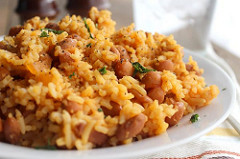
Table \(\PageIndex{2}\): Complementary protein sources
Foods |
Lacking Amino Acids |
Complementary Food |
Complementary Menu |
|---|---|---|---|
|
Legumes |
Methionine, tryptophan |
Grains, nuts, and seeds |
Hummus and whole-wheat pita |
|
Grains |
Lysine, isoleucine, threonine |
Legumes |
Cornbread and kidney bean chili |
|
Nuts and seeds |
Lysine, isoleucine |
Legumes |
Stir-fried tofu with cashews |
References
Institute of Medicine. (2005). Dietary reference intakes for energy, carbohydrate, fiber, fat, fatty acids, cholesterol, protein, and amino acids. The National Academies Press.
Institute of Medicine. (2011). Dietary reference intakes for calcium and vitamin D. The National Academies Press.
National Academies of Sciences, Engineering, and Medicine. (2024). Rethinking the acceptable macronutrient distribution range for the 21st century: A letter report. The National Academies Press.
Thomas, D. T., Erdman, K. A., & Burke, L. M. (2016). Position of the Academy of Nutrition and Dietetics, Dietitians of Canada, and the American College of Sports Medicine: Nutrition and athletic performance. Journal of the Academy of Nutrition and Dietetics, 116(3), 501-528.
Tome, D. (2012). Criteria and markers for protein quality assessment – A review. British Journal of Nutrition, 108(S2), S222–S229.
U.S. Department of Agriculture. (2018, December). National nutrient database for standard reference.
U.S. Department of Health and Human Services & U.S. Department of Agriculture. (2015). 2015–2020 dietary guidelines for Americans (8th ed.).
Attribution
6.6 Proteins, Diet, and Personal Choices © by Maureen Zimmerman and Beth Snow is licensed under CC BY-NC-SA 3.0.